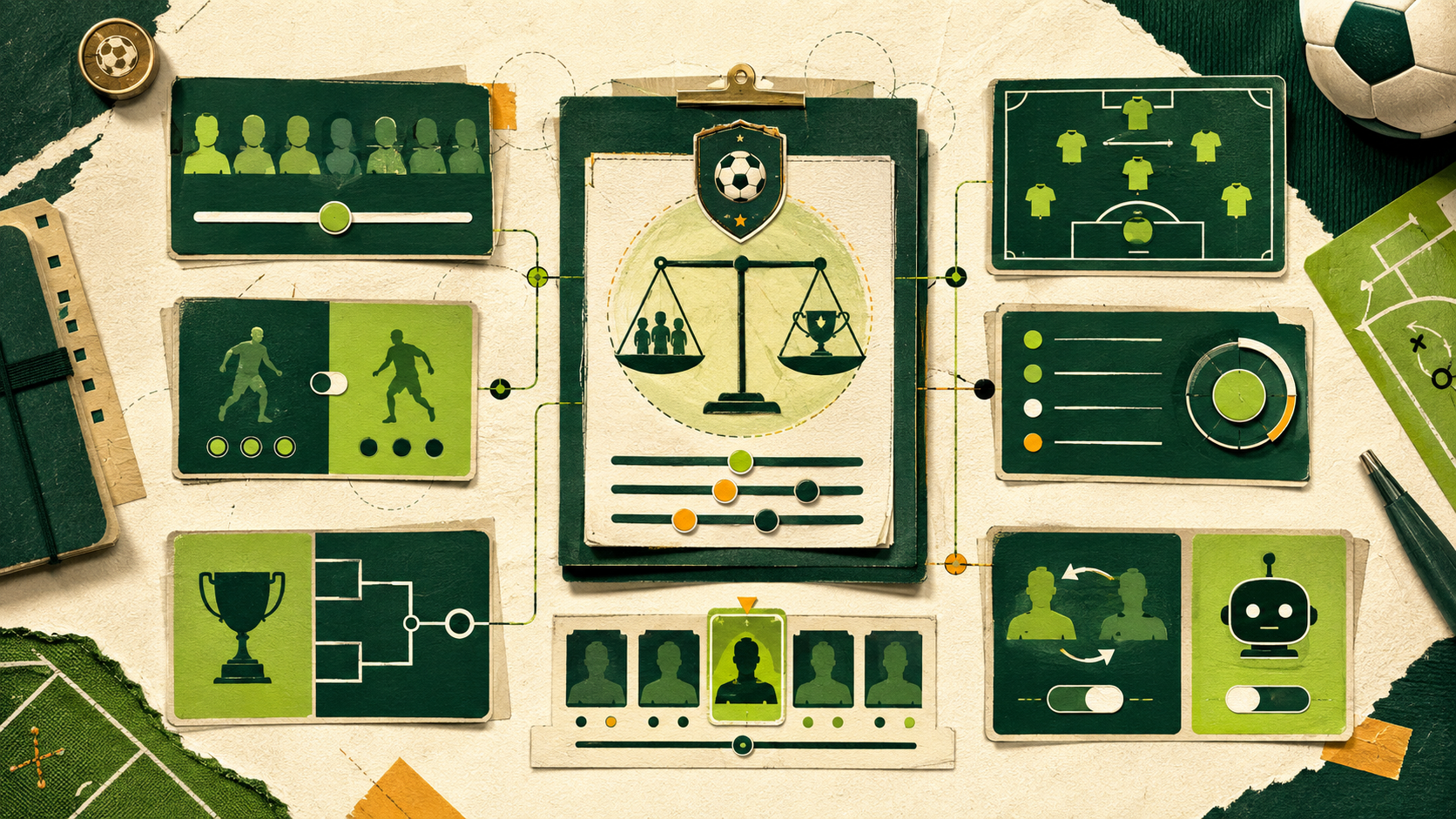
A good fantasy trade is not about proving that one player is better than another. It is about improving what your squad can do each Gameweek. That might mean turning midfield depth into a reliable forward, exchanging one premium player for two starters or moving early before a change in role becomes obvious to the rest of the league.
The strongest offers also work for the other manager. Start with the problem each squad needs to solve, then judge the players through your league's scoring, the available Player Pool and the roles they are likely to keep. A fair trade does not need to be perfectly equal on paper. It needs to make sense for both sides.
A player's value depends on your league
Exclusive ownership makes value relative. If you trade away a midfielder, you are not only losing that player. You are also accepting the best replacement you can start or find in your league. The same deal can therefore be sensible in a 6-manager league with strong free agents and damaging in a 12-manager league where dependable minutes are scarce.
Your scoring model changes the calculation too. Classic, Balanced and Analytics reward performances differently, so check how each player scores in your actual league rather than relying on reputation or advice written for another format. Total points, average points, upcoming fixtures, availability and projections can all help, but none should decide the trade alone. The TFF scoring guide explains how the three models differ.
Start with what both squads need
Before choosing players, look at the other manager's roster. Where are they short? Which position can they afford to trade from? An offer becomes more credible when it solves a visible problem instead of asking somebody to take the players you no longer want.
Imagine you have several playable midfielders but cannot trust your second forward. Another manager has forward depth and needs a midfielder. A similarly valued one-for-one swap could strengthen both starting XIs, even if one player has scored slightly more so far. The point is not to match historic totals. It is to improve the decisions both managers can make next.
Trade from strength
Depth only helps when you can use it. If two useful players regularly compete for one place in your XI, packaging them for a stronger weekly starter can raise your ceiling. TFF supports unequal multi-player trades, including two-for-one offers, as long as both active rosters stay inside the league's window. The default window is 13 to 16. If receiving extra players would take a squad above its ceiling, the manager must name the required drops as part of the deal.
That makes the drop part of the trade. Receiving two players is not automatically better than receiving one if the second arrival only forces you to release somebody equally useful. The manager consolidating into one stronger player is also accepting a thinner bench. Lineup mode, injury risk and the quality of the Player Pool should all shape which side benefits more.
Buy low and sell high for the right reasons
Buying low does not mean targeting every good player after one poor score. Look for a gap between results and role. Secure minutes, set pieces, involvement in dangerous areas or a run of missed chances may support a better outlook than recent points suggest. A reduced role, repeated early substitutions or reliance on an unlikely scoring streak can point the other way.
The same discipline applies when selling high. One big Gameweek can create interest, but selling only works if the return improves your squad more than the original player can. Use recent form as the start of the question, not the answer. The broader process in how to win a draft fantasy league follows the same rule: react to changing opportunity, not noise.
Use projections as evidence, not a verdict
TFF's projections can help compare upcoming fixtures and likely scoring under your league's model. The 3GW proj view is particularly useful when one player has a strong short-term schedule and another looks better across the season. Availability and recent statistics provide extra context when the difference is close.
Projections are estimates. They cannot guarantee a start, capture every late team update or decide whether a role will last. A sensible trade combines the numbers with expected minutes, tactical role and the replacement you would use if the move went wrong. That is especially important with new signings, returning players and small samples.
Know when the trade will process
Trades are available between human managers in active Full Season leagues. Start from a player in your league's Player Pool, choose Trade, build the offer and submit it. Both managers must accept. Leagues using Commissioner approval add one more review before the deal can complete. Guillotine Leagues do not use trades, and bot teams cannot be trade partners.
An accepted deal can process immediately when every exchanged player is unlocked. If any player involved has already locked for the current Gameweek, the whole trade waits for the post-Gameweek transaction window. Trades are processed before waivers, which can change whether a claim remains valid. Completed deals cannot be reversed, so check every player and required drop before accepting.
Check the whole deal before accepting
Use this checklist before you send or accept an offer:
-
Does it improve your strongest realistic XI?
-
Which position is hardest to replace in this league?
-
Who is actually available in the Player Pool?
-
How do the players fit your league's scoring model?
-
Are their roles, minutes and availability moving in the right direction?
-
What do the next three fixtures and projections suggest?
-
Does the deal leave enough bench cover?
-
Would you still make it after removing last Gameweek's points from view?
-
Does the offer solve a real need for the other manager?
TFF checks the active-roster limits when a trade is proposed and processed, but it does not decide whether your new positional balance is sensible. Make sure the final squad can support the XI you want to field rather than assuming the trade screen has made that strategic choice for you.
Make offers worth discussing
The best trade is not always the one with the biggest name. It is the one that improves the points you can realistically put into your XI without creating a more expensive weakness elsewhere. Judge the full roster, not just the players shown in the offer, and make the other manager's reason for accepting easy to understand.
Open your league's Player Pool, find a player who solves a genuine need and use Trade to build an offer that works for both squads.